
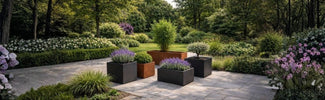
Plantenbakken kiezen in 2026: top 7 bloembakken & bloempotten buiten + koopgids

Planter Boxes in 2026: Top 7 Flower Boxes & Outdoor Plant Pots + Buying Guide

, 12 min reading time

Not sure which planters or outdoor flower pots best suit your garden, patio, or balcony? You’re not alone: many people choose a flower box based on looks, then run into issues like poor drainage, too little root space, or quick discoloration. In this guide, you’ll learn exactly how to choose the right planter based on material, size, and placement (with or without a base). You’ll also find a practical top 7 with clear “best for” guidance and a short explanation for each pick. That way, you can make a smart 2026 choice for durable outdoor planters and outdoor pots that stay beautiful for years.

What are planters?

A planter (also called a flower box or planter box) is a fixed container where you can place flowers, plants, herbs, or small shrubs. Compared to individual flower pots, planters often offer more volume, stability, and structure. They’re ideal for creating zones (for example, a green divider), setting a clean line along your patio, or making an entryway look more defined.

Pros and cons of planters and outdoor flower pots

Pros

  • More structure and atmosphere: easy to create “green lines” and corners in the garden or on a patio.
  • More root space: larger planters dry out less quickly and give plants better stability.
  • Flexible layout: movable (especially polyester and aluminum) and great for seasonal changes.
  • Works on hard surfaces: with a base and drainage, also ideal on tiles and rooftop terraces.

Cons

  • Drainage is crucial: without water runoff you risk root rot.
  • Weight after filling: large planters get heavy—choose the location before filling.
  • Wrong size = more maintenance: too small means more frequent watering and more plant stress.
  • Material choice matters: some materials need extra attention (e.g., runoff during the early patina phase of corten steel).

Top 7 planters and flower boxes for outdoors in 2026

The selection below is based on practical use cases (balcony, patio, garden beds, entryway) and performance in wind and weather. We focus on durability, ease of maintenance, stability, and appearance, so you can quickly see which type of planter best fits your outdoor space.

1) GARDRA Polyester planter 40x40x40 cm - Black grey (RAL 7021)

Key features: compact size, clean design, light but strong, weather- and UV-resistant.
Best for: balcony, small patio, or as a standalone accent near a seating area.
Link: view product.

2) GARDRA Polyester planter 50x50x50 cm - Black grey (RAL 7021)

Key features: versatile size, easy to maintain, modern look, optionally available in other RAL colors.
Best for: entryway, patio, or as a pair (2 pieces) beside a door or steps.
Link: view product.

3) GARDRA Polyester planter 60x60x60 cm - Black grey (RAL 7021)

Key features: extra volume and stability, healthier root environment thanks to larger capacity, low maintenance.
Best for: larger ornamental grasses, small shrubs, or statement greenery on a patio.
Link: view product.

4) Square corten steel planter without base 60x60x60 cm

Key features: A-grade corten steel, warm rust tone, strong top edge, designed for long-term outdoor use.
Best for: placing on open soil in beds (no base = natural drainage and root growth).
Link: view product.

5) Long corten steel planter with base 200x40x40 cm

Key features: long model for linear planting, with base and drainage, robust construction.
Best for: a divider on patios/hard surfaces (privacy with ornamental grasses or perennials).
Link: view product.

6) Square aluminum planter 50x50x50 cm - Jet black (RAL 9005)

Key features: rust-free aluminum, durable coating, modern look, low maintenance.
Best for: a clean, timeless entryway or patio setup.
Link: view product.

7) Square aluminum planter 60x60x60 cm - Jet black (RAL 9005)

Key features: extra spacious, strong top edge, coating stays beautiful for a long time, suitable for larger plants.
Best for: larger planting near an entrance, pool house, or a spacious patio.
Link: view product.

Comparison table: Planters and outdoor flower pots

Model Material Size Base Best for Maintenance
GARDRA Polyester RAL 7021 Polyester 40x40x40 Options available Balcony/compact Low
GARDRA Polyester RAL 7021 Polyester 50x50x50 Options available All-round patio Low
GARDRA Polyester RAL 7021 Polyester 60x60x60 Options available Statement greenery Low
Corten steel square Corten steel 60x60x60 Without base Garden bed/open soil Low
Corten steel long Corten steel 200x40x40 With base Divider Low
Aluminum square RAL 9005 Aluminum 50x50x50 With base (build-up) Entryway/clean Very low
Aluminum square RAL 9005 Aluminum 60x60x60 With base (build-up) Large plants Very low

Buying guide: How to choose the right planter

1) Material: What fits your style and use?

  • Polyester planters: clean look, lightweight, colorfast, and weather-resistant. Ideal if you want design and convenience.
  • Corten steel planters: warm and robust, with a natural rust layer that protects. Strong as a structural garden element.
  • Aluminum planters: rust-free, coated, and modern. A top choice for entryways and patios with minimal upkeep.

2) Size: Choose based on root space (not just looks)

  • 40 cm: great for compact planting and smaller spaces.
  • 50 cm: a safe all-round choice for many outdoor plants.
  • 60 cm: more buffer against drying out; strong for larger plants.
  • 200 cm long: ideal for linear planting and dividers.

3) With base or without base: a practical choice

  • Without base: only makes sense on open soil (garden bed). Roots can grow through, water drains away naturally.
  • With base: needed on tiles, concrete, or rooftop terraces. Combine with a drainage build-up.

4) Common mistakes (and how to avoid them)

  • No drainage: always provide a drainage layer + water runoff.
  • Outdoor pot too small: choose one size larger for less water stress.
  • Wrong fill: dense soil holds water; choose an airy mix.
  • Unstable placement: place the planter on a level, solid surface (especially with aluminum).

Step-by-step: Fill and place a planter correctly

  1. Choose the spot: decide where the planter will go (large planters become heavy after filling).
  2. Prepare drainage: add about 10 cm of hydro pebbles or gravel at the bottom.
  3. Add root cloth: place a permeable root cloth over the drainage (pull it slightly up along the sides).
  4. Fill with substrate: use an airy soil mix suited to your plant type (e.g., Mediterranean mix, universal, or planting soil).
  5. Place the plant: position at the right height, fill around it, and press lightly (don’t compact hard).
  6. Water: water thoroughly and check that excess water can drain.
  7. Check after 7 days: check moisture, settling, and drainage; top up if needed.

FAQs about planters, flower boxes, and outdoor flower pots

What’s the difference between planters and outdoor flower pots?

Planters are usually larger and provide more structure, which makes them suitable for combinations of plants or as a divider. Outdoor flower pots are often more compact and easier to move. Choose planters for a fixed layout, and pots if you like switching things up by season.

Which planter is best for a balcony?

For balconies, lightweight and low-maintenance materials are helpful, such as polyester or aluminum. Choose a compact size like 40x40x40 cm or 50x50x50 cm so you have enough root space without too much weight. Also make sure you have good drainage to prevent water buildup.

Do outdoor pots always need drainage holes?

For outdoor use, drainage is almost always the safest choice because rainwater can otherwise sit in the pot. Drainage holes help prevent root rot and keep plants healthier. Add a drainage layer to improve runoff even more.

When should I choose a corten steel planter without a base?

A corten steel planter without a base is ideal when placing it directly on open soil. Excess water can drain away into the ground and roots can grow deeper. That makes this type especially suitable for garden beds and larger, long-term planting.

How do I maintain polyester and aluminum planters?

Polyester and aluminum are low maintenance: usually, cleaning with water and a mild detergent is enough. Avoid abrasive cleaners so the finish stays intact. For coated aluminum, occasional cleaning helps keep the look crisp and tidy.

Stop comparing: when you should NOT buy an outdoor planter or flower pot

When this is (probably) not suitable

  • Your spot holds a lot of water: if your planter sits in a dip, on soft ground, or somewhere without runoff, you’ll run into root rot faster.
  • You want “zero maintenance” but choose small: compact planters look great, but they dry out faster and require more frequent watering.
  • You expect every plant to handle outdoors year-round: not every plant is truly hardy in a pot.

When a planter is overkill

  • You mainly want to switch seasonal color: large, heavy planters can be impractical if you swap planting often.
  • You only have one small plant: a big statement planter is often more than you need.
  • Your setup is temporary: if you’re renting or redesigning, flexibility matters more than size.

Common buying mistakes (easy to avoid)

  • Choosing looks over root space.
  • Underestimating drainage.
  • Choosing the wrong option: with base vs. without base.
  • Deciding the final spot after filling.

The “stop comparing” decision guide

If you know where the planter will go, you’ve chosen enough root space, and drainage is sorted, further comparison is mostly noise. At that point, the smartest move is to choose one suitable option and move on.

Why Doika: Expertise, quality, and worry-free buying

Doika helps you choose planters, flower boxes, and plant pots designed for outdoor use—with attention to material, finish, and a practical setup for healthy planting. You get clear product information, smart collections, and advice focused on what works in real life: drainage, placement, and the right size. Plus, you buy with confidence thanks to transparent service terms; many models come with warranty and you benefit from a cooling-off period (see conditions on each product page).

Conclusion

The best planters for 2026 combine the right size, good drainage, and a durable material that fits your outdoor space. Want to make a strong choice quickly? Start with the planters collection and choose outdoor planters that best match your garden, patio, or balcony.


Frequently Asked Questions

What is the difference between outdoor planters and flower pots?
Planters are often larger and provide more structure, making them suitable for combining plants or using them as dividers. Outdoor flower pots are usually more compact and easier to move. Choose planters for a fixed layout and flower pots if you like to change things seasonally.
Which planter is best for a balcony?
On a balcony, lightweight and low-maintenance materials such as polyester or aluminium are practical. Choose a compact size like 40x40x40 cm or 50x50x50 cm to ensure sufficient root space without excessive weight. Also pay attention to good drainage to prevent water issues.
Do outdoor plant pots always need drainage holes?
For outdoor use, drainage is almost always the safest option, as rainwater can otherwise remain in the pot. Drainage holes help prevent root rot and keep plants healthier. Using a drainage layer further improves water flow.
When should I choose a corten steel planter without a base?
A corten steel planter without a base is ideal when placed directly on open ground. Excess water can drain into the soil and roots can grow deeper. This makes it especially suitable for borders and larger, perennial planting.
How do I maintain polyester and aluminium flower pots?
Polyester and aluminium are low-maintenance: usually cleaning with water and a mild detergent is sufficient. Avoid abrasive products to keep the finish looking good. With coated aluminium, periodic cleaning helps maintain a clean and polished appearance.

Latest blogs

  • Hoe onderhoud je een bronzen beeld?

    How do you maintain a bronze sculpture?

    Read more 

  • Wat is de beste houtopslag in 2026?

    What is the best firewood storage in 2026?

    Read more 

  • Hoe houtopslag correct te regelen in 2026: Brandhout veilig en droog opslaan

    How to Set Up Wood Storage Correctly in 2026: Store Firewood Safely and Dry

    Read more 

Previously viewed by you

Login

Forgot your password?

Don't have an account yet?
Create account