
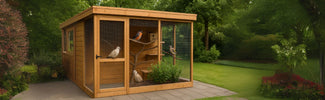
Which Branches Are Safe for an Aviary?
, 7 min reading time
, 7 min reading time
Which branches are safe for an aviary? Choosing the right type of wood is essential for your birds’ health, safety, and overall well-being. In the wild, birds perch on branches with varying diameters, textures, and surfaces. This supports foot muscles, helps prevent pressure sores, and encourages natural behaviors such as climbing and chewing. The wrong type of wood, however, may contain toxic substances or irritate the respiratory system. In this guide, you’ll learn which branches are safe, which ones to avoid, how to prepare them correctly, and how to maintain them for a hygienic aviary environment.
Smooth, uniform perches place constant pressure on the same areas of a bird’s feet. Over time, this can lead to foot problems. Natural branches provide variation in grip and posture, promoting healthy circulation and active feet. They also offer enrichment: birds climb, chew, move more frequently, and stay mentally stimulated.
Not all tree species are suitable for birds. Some contain toxic compounds, resins, oils, or high levels of tannins. The following wood types are generally considered safe for budgies, parrots, canaries, finches, and other aviary birds—provided they are untreated and free from pesticides.
Suitable branches:
Browse our aviary accessories and supplies
| Wood Type | Suitable For | Texture & Chew Value | Moisture Resistance | Notes |
|---|---|---|---|---|
| Willow | Parakeets, parrots | Soft, highly chewable | Medium | Excellent for enrichment |
| Hazel | All species | Rough bark, firm grip | High | Natural diameter variation |
| Apple / Pear | Small & medium birds | Harder wood, comfortable for feet | High | Use only untreated wood |
| Birch | Smaller birds | Lightweight, smoother surface | Medium | Replace regularly |
| Beech | All species | Strong, rarely splinters | High | Ideal as a main perch |
| Maple | Medium species | Firm, neutral bark | High | Good option for outdoor aviaries |
| Sweet chestnut | Larger birds | Strong, good grip | High | Do not confuse with horse chestnut |
Only use branches that are untreated, unsprayed, and free from mold.
Some woods are hazardous because they contain toxic substances, resins or essential oils, or high concentrations of tannins. These can cause respiratory irritation, digestive issues, or poisoning in birds. Additionally, wood that splinters easily or has thorns presents a physical injury risk.
Even safe wood types must be properly cleaned. Mold, parasites, droppings, or environmental residues can pose risks if not removed.
A bird should be able to wrap its toes around approximately 60–75% of the branch. Variation is more important than one fixed size.
| Bird Type | Min. Diameter | Max. Diameter | Best Practice |
|---|---|---|---|
| Canaries / Finches | 1.0 cm | 1.5 cm | Offer 2–3 slight variations |
| Small Parakeets | 1.5 cm | 2.5 cm | At least three different sizes |
| Budgies | 2.0 cm | 3.0 cm | Mix thin and medium branches |
| Small Parrots | 2.5 cm | 4.0 cm | Include one thicker resting perch |
Natural branches are consumable items. They wear down, become damp, and may weaken structurally—especially with heavy chewing.
Safe options include willow, hazel, apple, pear, birch, beech, maple, and sweet chestnut, as long as they are untreated and free from pesticides.
Natural branches provide varied diameters and textures that promote foot health, prevent pressure sores, and encourage movement and natural behavior.
Avoid yew, oleander, laburnum, cherry laurel, oak, and most resinous softwoods such as pine and spruce due to potential toxicity or respiratory irritation.
Clean thoroughly with water and a brush, disinfect by heating or soaking in diluted vinegar, and allow them to dry completely before use.
Depending on bird species and chewing intensity, replace branches every 2 to 12 weeks and inspect them weekly for mold or damage.
At Doika, we combine knowledge of animal welfare with durable solutions for aviary design. Our carefully selected range focuses on safety, quality, and ease of use, helping you create a natural and stimulating environment for your birds—from essential structures to practical accessories.
The right branches make a real difference in promoting healthy feet, natural movement, and daily enrichment. Choose proven safe wood types such as willow, hazel, and untreated fruit tree branches, prepare them carefully, and replace them when necessary. Ready to upgrade your setup? Explore our online aviary specialist collection today.


