
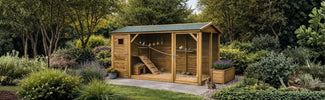
Animal enclosures made from pressure-treated wood
, 8 min reading time
, 8 min reading time
#VALUE!
Animal enclosures made of impregnated wood are a popular choice for anyone looking for a durable, low-maintenance and weather-resistant outdoor animal enclosure. Whether it's a rabbit hutch, chicken coop or aviary, these enclosures need to provide protection against rain, moisture and temperature fluctuations all year round. By impregnating wood under pressure and vacuum, it is better protected against mould and wood rot, which significantly extends its lifespan. Several factors play a role when choosing a wooden animal enclosure, such as material choice, placement in the garden and ease of maintenance. In this article you'll read what impregnated wood actually is, what benefits it offers for animal enclosures, and what to consider in terms of use, appearance and maintenance. This way you can make a well-informed choice that suits your animal and your outdoor space.
Your wooden animal enclosure is made of impregnated wood. This wood is treated under pressure in a vacuum, allowing protective agents to penetrate deep into the wood. This makes the wood more resistant to water, mould and wood rot. This treatment ensures a minimum lifespan of around 10 years, depending on placement, weather conditions and use.
| Property | What it means | Maintenance needed? | Effect on lifespan |
|---|---|---|---|
| Pressure and vacuum impregnation | Long-term protection against moisture and mould | No, no additional treatment needed | Significantly extends lifespan |
| Indicative lifespan | On average around 10 years with normal use | Not applicable | Baseline expectation with correct placement |
| Natural greying | Colour change due to sunlight, especially in full sun | Optional: stain or oil against greying | No effect on quality or lifespan |
| Can be repainted | Option to preserve or adjust appearance | Optional, as desired | No effect on lifespan |
| Green residue | Temporary and generally harmless phenomenon | No, disappears on its own | No effect on lifespan |
Considering buying an animal enclosure? Pay attention to the following points before making your choice.
Only agents that are legally approved and extensively tested for safety for humans, animals and the environment may be used to treat wood. The impregnated wood we use is therefore not harmful to pets such as rabbits, chickens or birds under normal use of the enclosure.
Due to the influence of sunlight, the outer layer of wood discolours over time. This natural process is called greying and occurs faster when the enclosure stands in full sun. If you want to slow this down, you can treat the wood with a suitable stain, oil or varnish for outdoor use.
FSC
Wood is a renewable resource when it comes from sustainably managed forests. FSC certification helps ensure that no more wood is harvested than grows back. This way you choose an animal enclosure with a long lifespan and a responsible origin.
Every tree has a unique structure and colour. As a result, colour differences may be visible in new wooden products. These differences often become less noticeable over time due to sunlight and weather influences.
During production, impregnation salts can mix with resin from the wood and become visible on the surface. This can look like mould, but is generally a normal and harmless phenomenon that often disappears on its own once the enclosure is placed outdoors.

Is the enclosure permanently on damp ground without any elevation or drainage? Then good ventilation remains especially important, regardless of the wood treatment.
Do you have a rabbit, chickens or birds that stay outside all year round? Then an impregnated outdoor animal enclosure offers a sturdy, low-maintenance base that withstands changing weather conditions.
Doika helps you make the right trade-off between appearance, maintenance and lifespan, tailored to the placement and the type of animal the enclosure is intended for.
Under normal conditions and with correct placement, an animal enclosure made of impregnated wood lasts on average around 10 years. Good ventilation and avoiding constant ground contact can extend the lifespan.
Yes, only approved and tested impregnation agents are used, making the wood safe for pets under normal use.
Impregnated wood is low-maintenance and doesn't need additional treatment for protection. Optional painting or staining can help slow down greying.
Greying is a natural process caused by UV radiation from sunlight. It only affects the appearance, not the quality or lifespan of the wood.
Green residue is usually caused by harmless remnants of impregnation salts mixing with resin from the wood. It often disappears on its own after exposure to outdoor air.
At Doika, we select animal enclosures with an eye for sustainability, functionality and comfort for your animals, with clear product information and reliable service. Customers rate Doika 4,3/5 on Trustpilot, and you benefit from free delivery from €40, a guarantee against manufacturing defects, a generous return period and support from our customer service team for questions about use or maintenance.
Animal enclosures made of impregnated wood combine sustainability, ease of maintenance and a long lifespan. Keep natural greying and temporary residue on new products in mind. Looking to buy a sturdy and responsible animal enclosure? Discover our range of animal enclosures and make a choice that suits your garden and your animal.


